
Best Practices for Medical Records Abstraction in Quality Improvement Initiatives
The realm of healthcare is vast and intricate, with countless moving parts all working towards the collective goal of ensuring patient well-being. At the heart

Filter By:

The realm of healthcare is vast and intricate, with countless moving parts all working towards the collective goal of ensuring patient well-being. At the heart
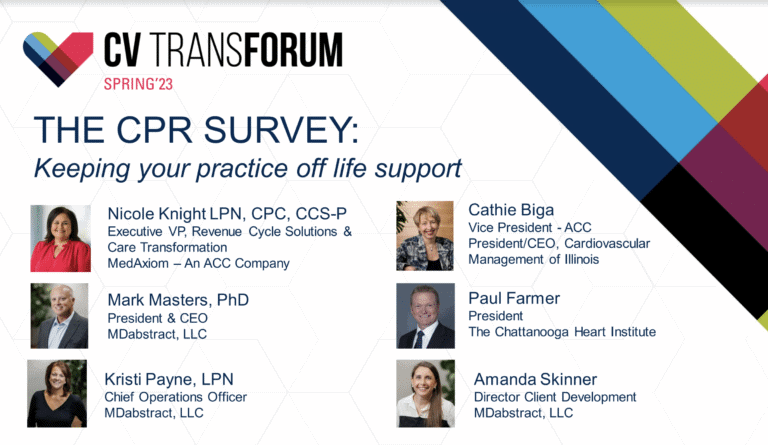
MDabstract recently hosted “The CPR Survey: Keeping Your Practice Off Life Support” Spotlight Lunch Session at MedAxiom’s CV Transforum Spring’23 conference. Nicole Knight, Mark Masters,

As healthcare documentation demands continue to increase, having efficient, accurate patient data management strategies in place is a necessity. Ongoing clinical data capture is one

Since MDabstract was founded in 2010 our organization has continuously looked for ways to be of service to our healthcare provider community and our overarching

A provider – who was recently acquired by a large health system – was lamenting their data migration strategy because there was a gap between the information

Back to school time is upon us and “Tips for a Successful 1st Day” posts are being shared all over our social feeds. But the
Effective data management is crucial for healthcare organizations as it directly impacts patient care and operational efficiency. With the increasing volume of patient data, healthcare providers must implement robust data management strategies to ensure accuracy and accessibility.
For instance, organizations that utilize comprehensive data management systems can streamline their operations, reduce errors, and enhance decision-making processes. By leveraging technology such as Electronic Health Records (EHRs) and data analytics, healthcare providers can improve patient outcomes and operational workflows.
Implementing best practices for clinical data capture is essential for maintaining high-quality health records. Accurate data collection not only supports clinical decision-making but also ensures compliance with regulatory standards.
Healthcare organizations should focus on training staff, utilizing standardized data entry protocols, and employing technology that facilitates real-time data capture. These practices help minimize discrepancies and enhance the reliability of patient data, leading to better healthcare delivery.
Data migration is a critical process for healthcare organizations, especially during transitions to new systems or technologies. A well-planned data migration strategy ensures that patient information is accurately transferred without disruption to care.
Healthcare providers can benefit from conducting thorough assessments of their existing data, establishing clear timelines, and involving cross-functional teams in the migration process. By prioritizing data integrity and continuity, organizations can mitigate risks associated with data loss or inaccuracies during migration.
Effective documentation management plays a vital role in enhancing patient care by ensuring that healthcare professionals have access to accurate and timely information. Proper documentation supports clinical decision-making and fosters better communication among care teams.
Implementing a centralized documentation management system allows healthcare organizations to streamline their processes, reduce administrative burdens, and focus more on patient interactions. This not only improves efficiency but also contributes to higher patient satisfaction and better health outcomes.